


Last Updated: November 21, 2026
Quick Summary
For coily hair, choose a rinse-out intensive protein treatment built on hydrolyzed wheat protein, applied to clean, sectioned hair and always followed by a moisture step. Match the treatment's strength to your schedule: intensive formulas every few weeks for repair, lighter quinoa protein conditioners for in-between wash days. Skip the moisture follow-up and hair turns stiff and brittle.
- Coily hair loses protein faster than any other curl pattern, and the tightest coils lose it fastest.
- A protein treatment rebuilds the hair shaft, while a deep conditioner adds moisture and slip.
- Apply treatment from mid-shaft to ends first, then work toward the roots.
- Leaving protein on longer than the label directs increases stiffness risk without extra strengthening.
- If a wet strand snaps with no stretch, treat with an intensive protein treatment.
Table of Contents
- Why Coily Hair Needs Protein (and How to Tell You're Deficient)
- Protein Treatment vs. Deep Conditioner: What's the Difference?
- Comparison Table: Best Protein Treatments for Coily Hair
- The Best Protein Treatment for 4C Natural Hair
- Protein Treatment for Coily Hair Breakage: What Actually Repairs Strands
- How Often to Use Protein Treatment on Coily Hair
- Protein Treatment for Hair at Home: A Safe Application Walkthrough
- Protein vs. Moisture: A Decision Guide for Coily Textures
- Frequently Asked Questions
Why Coily Hair Needs Protein (and How to Tell You're Deficient)
Coily hair loses protein faster than any other curl pattern, and the tightest coils lose it fastest of all. Type 4 hair's spongy structure means the cuticle lifts more easily during combing, styling, and washing, so the protein that gives each strand its strength leaches out with every wash day. Hair that snaps mid-shaft, sheds in small broken pieces, and feels rough no matter how much conditioner goes on it is a familiar pattern for coily textures.
Protein is the building block of the hair shaft itself. When those blocks are depleted, strands lose elasticity, meaning they stretch a little and then break instead of bouncing back. That elasticity loss is the real warning sign, not just dryness.
Signs Your Coils Are Asking for Protein
- Strands snap when wet, not just when dry
- Hair feels mushy or gummy after washing
- Curl definition fades and frizz takes over
- Breakage shows up as short pieces in the sink or comb
- Color-treated or heat-styled sections feel rougher than the rest
One or two of these signs usually means mild depletion. All five together point to a strand that needs reconstruction, not another moisturizing mask.
The biggest misconception about kinky, coily hair is that it can withstand rough treatment. It can't. Type 4 patterns are the most fragile curl pattern because of that spongy texture, and they are naturally drier than looser textures. If you want the full breakdown of why type 4 hair behaves this way, our guide on how type 4 hair differs from other curl patterns explains the structure behind the fragility.
Protein Treatment vs. Deep Conditioner: What's the Difference?
A protein treatment rebuilds the hair shaft by depositing hydrolyzed protein into gaps in the cuticle, while a deep conditioner primarily adds moisture and slip. They solve different problems, and using one when you need the other is why so many wash days end in frustration.
Think of it this way: a deep conditioner is a drink of water. A protein treatment is a repair patch. If your hair is thirsty, water fixes it. If your hair is structurally weak, water alone cannot rebuild what's missing.
Hydrolyzed protein is the key term on the label. The molecules are broken down small enough to actually penetrate the cuticle rather than sit on top of it. Hydrolyzed keratin and hydrolyzed wheat protein are the two most common forms, and both work by filling gaps in the hair shaft and reinforcing the cuticle so strands bend instead of snapping.
Deep conditioning still matters. It restores moisture balance and softness after protein does its repair work. The two steps work as a pair, not as substitutes.
Comparison Table: Best Protein Treatments for Coily Hair
Here's how the options compare by treatment type and price. The products below are the ones offered by Fancy's Hair Innovation.
| Product | Price | Treatment Type | Best For | Key Protein |
|---|---|---|---|---|
| Retention Therapy Protein Treatment | $38.00 | Rinse-out intensive | Brittle, damaged, color-treated coils | Hydrolyzed wheat protein |
| Strength & Restore Trio | $108.00 | 3-step system | Breakage recovery and prevention | Hydrolyzed wheat protein, silk protein, quinoa protein |
| The Natural Hair Regimen | $149.95 | Full 6-step routine | Complete wash-day rebuild | Hydrolyzed wheat protein, silk protein, quinoa protein |
| Hydration Restoration Conditioner | $35.00 | Rinse-out daily conditioner | Balancing protein and moisture | Quinoa protein |
Price
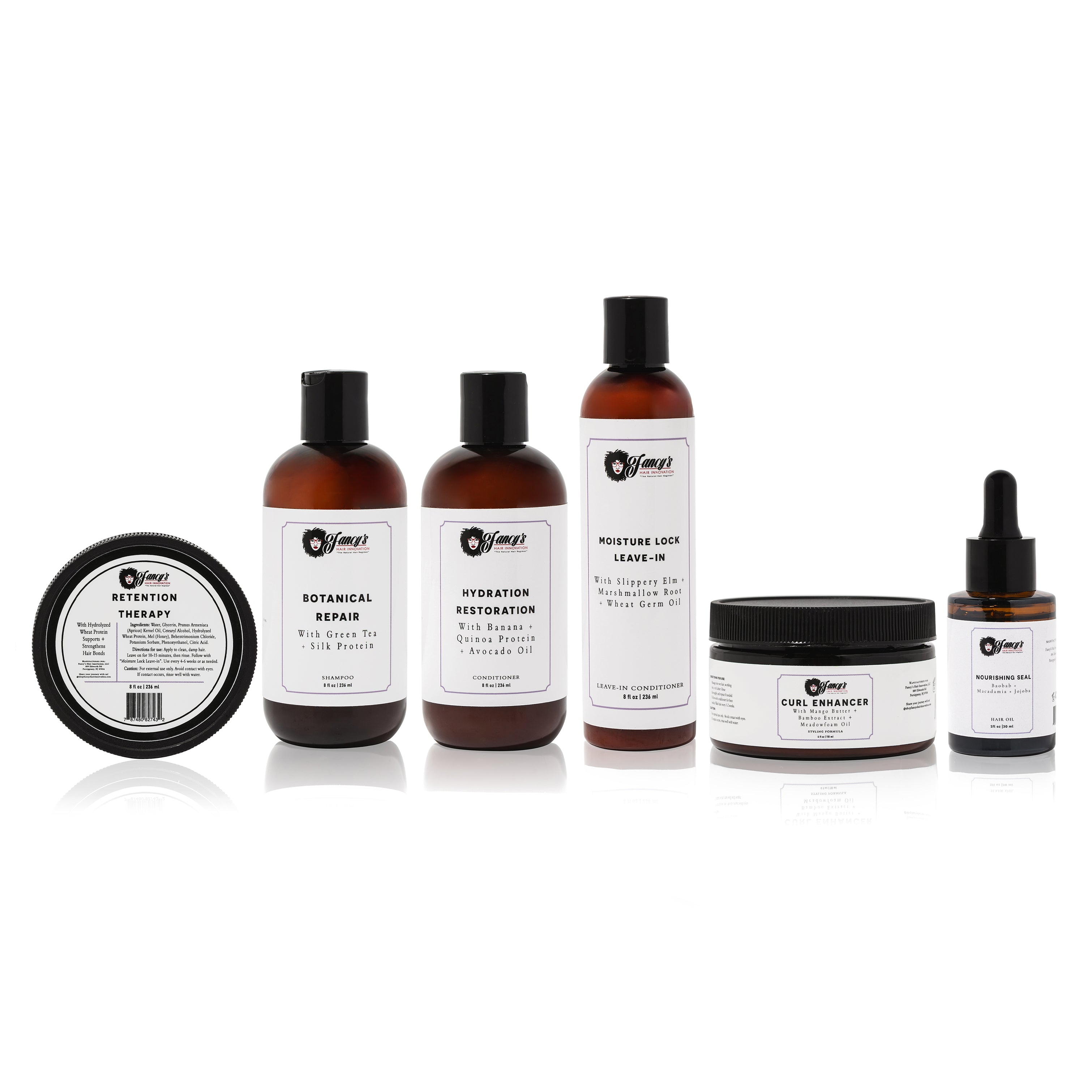
Notice that the listed options pair protein with a moisture ingredient, such as African wild honey, banana extract, or aloe vera.
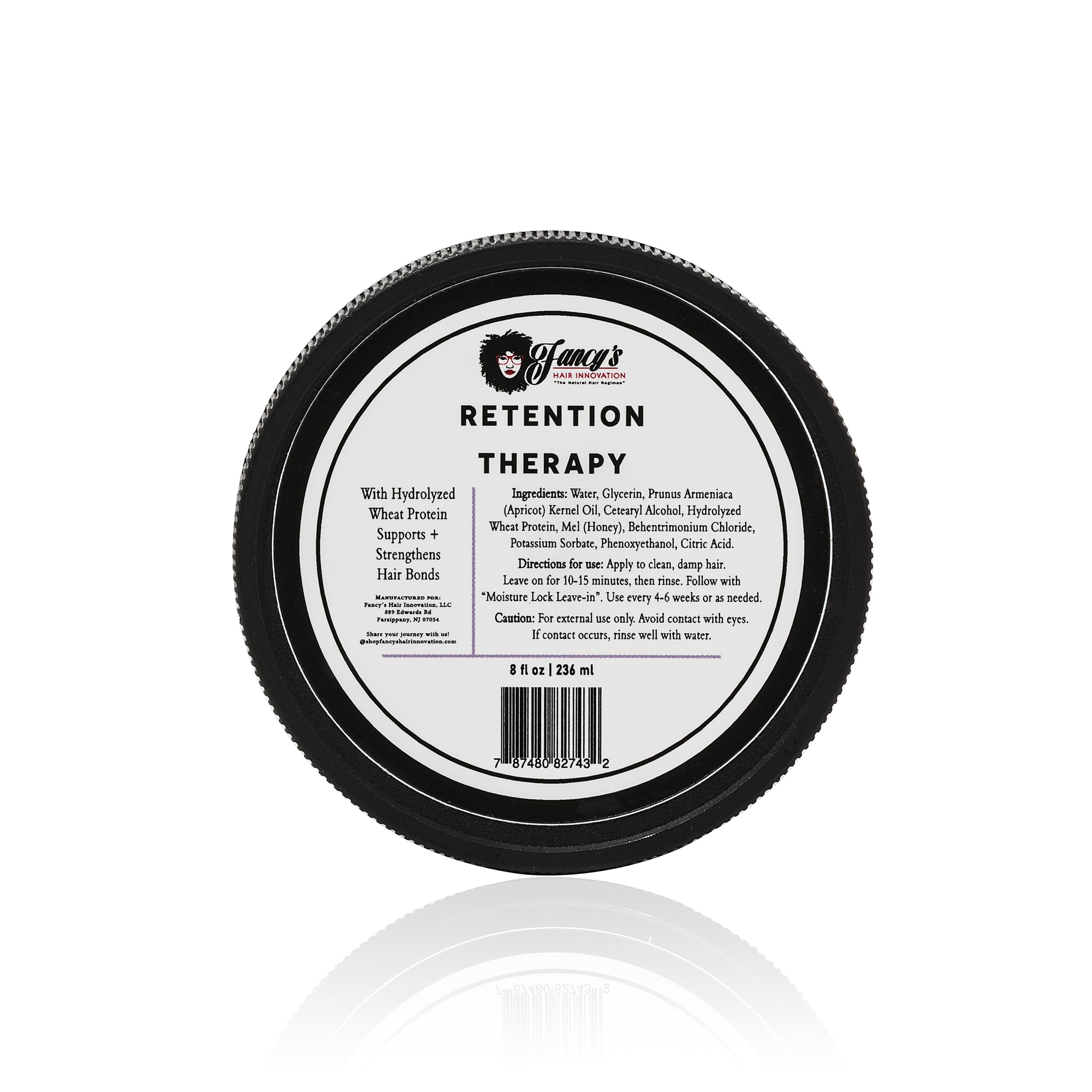
If you want to see the standalone treatment and buy it directly, you can shop the Retention Therapy Protein Treatment and read the full ingredient list.
The Best Protein Treatment for 4C Natural Hair
For 4C natural hair, a rinse-out treatment built on hydrolyzed wheat protein is one option to consider, applied in sections and followed by a moisture step.
Why Hydrolyzed Wheat Protein Works on Tight Coils
Hydrolyzed wheat protein is listed as a key ingredient in the Retention Therapy Protein Treatment, which is formulated to repair damage and rebuild resilience.
The Retention Therapy Protein Treatment also includes African wild honey, described in its listing as a natural humectant, and apricot oil, described in its listing as adding touchable softness without weighing curls down.
Protein Treatment for Coily Hair Breakage: What Actually Repairs Strands
Protein treatments are generally applied to clean hair, since product buildup can limit how much of a treatment reaches the strand.
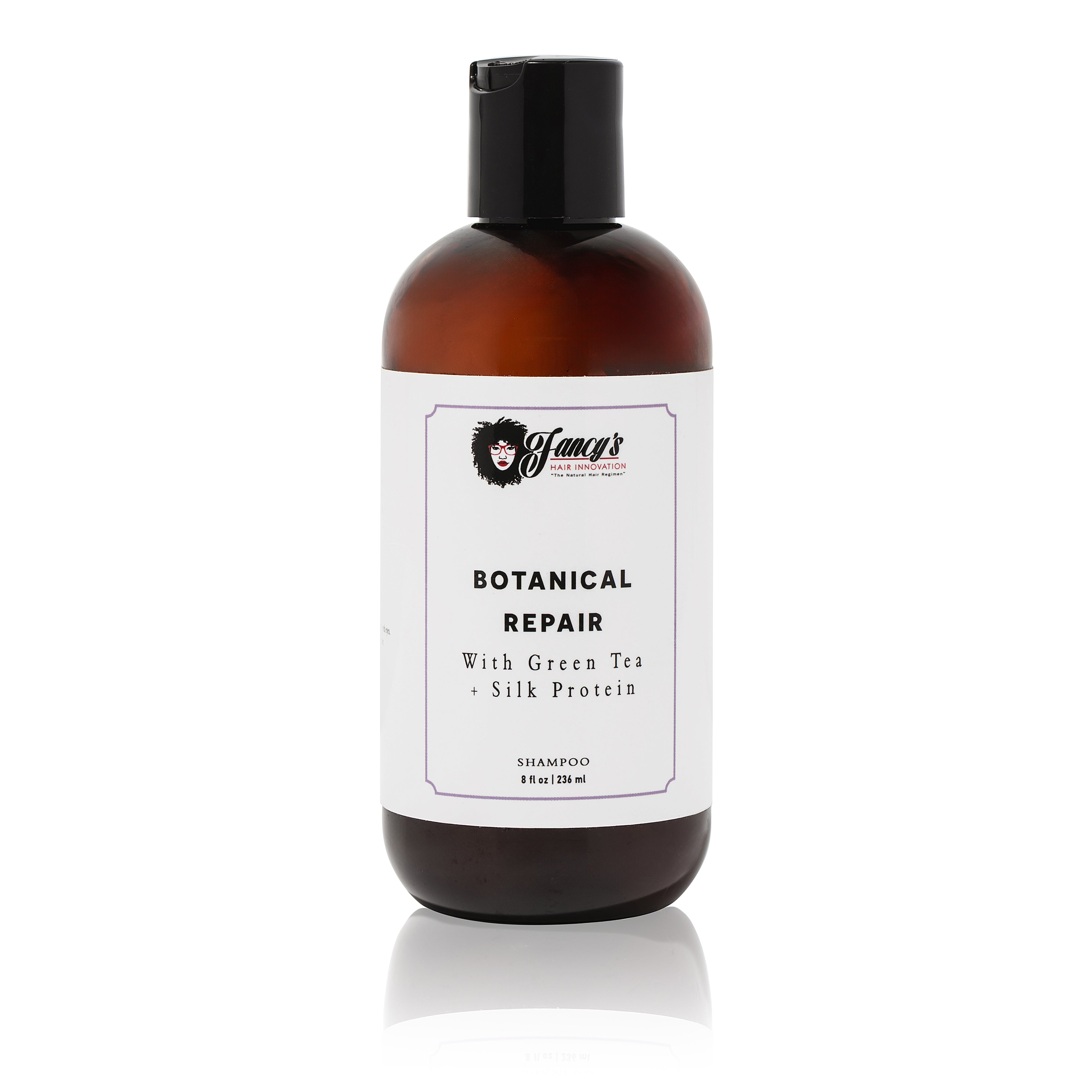
Start with a sulfate-free cleanser that removes buildup without stripping. The Botanical Repair Shampoo contains honey, green tea, and hydrolyzed silk protein, and its listing describes it as detoxifying the scalp and gently cleansing. Then apply the treatment to damp, sectioned hair and let it process according to the label.
Breakage that continues after several treatment cycles may be linked to handling factors such as rough detangling or tight styles, so reviewing those habits is worth considering. For a deeper walkthrough on stopping the cycle, read our guide on how to stop curly hair breakage.
How Often to Use Protein Treatment on Coily Hair
Many people find a protein treatment every few weeks works well, with the interval adjusted to how their hair responds. Frequency should track damage level, porosity, treatment strength, and your wash routine, not the calendar. A single schedule for every curl type is why some coils stay strong and others turn stiff.
Here's a simple schedule to follow:
Adjusting Frequency by Porosity and Wash Routine
Porosity can affect how hair responds to protein, so pairing treatments with a moisture step is one approach to consider. Your wash routine matters too.
Matching Treatment Strength to the Schedule
Not every protein treatment is intensive. A rinse-out intensive formula with hydrolyzed wheat protein is appropriate for the two-to-four-week repair cycle, while a daily conditioner that contains quinoa protein is a maintenance step, not a treatment. Using an intensive formula on a weekly schedule is the most common route to over-proteinization. Match the strength to the interval: intensive formulas for the longer repair cycles, lighter protein conditioners for in-between wash days.
Protective Styles, Color, and Chemical Treatments
If hair feels stiff, straw-like, or snaps without stretching, consider reducing protein and focusing on moisture for a few weeks. Slotting protein into a full wash-day sequence is easier when the rest of the routine is already set, which is why we recommend pairing it with a simple 6-step wash day routine for coily hair.
Protein Treatment for Hair at Home: A Safe Application Walkthrough
Applying a protein treatment at home safely comes down to four things: clean hair, even sectioning, correct processing time, and a moisture follow-up. Skip any one of them and you risk either no result or a stiff, brittle finish.
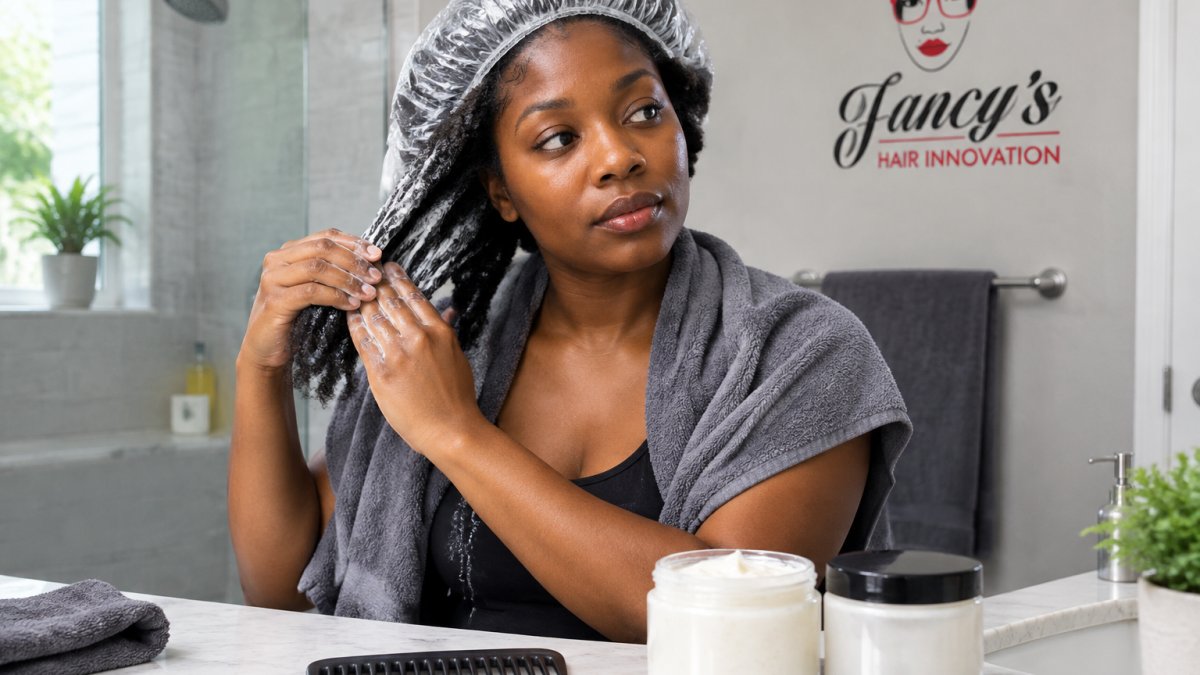
What you'll need:
- Sulfate-free shampoo
- Protein treatment
- Wide-tooth comb
- Plastic cap or shower cap
- Moisturizing conditioner or leave-in
Step 1: Cleanse first. Wash with a sulfate-free shampoo to remove buildup. Protein cannot penetrate coated hair.
Step 2: Section into four to six parts. Apply from mid-shaft to ends first, then work toward the roots. Coils need sectioning to get even coverage.
Step 3: Comb through gently. Use a wide-tooth comb to distribute product evenly. Do not rip through tangles.
Step 4: Respect the processing time. Follow the label. Leaving protein on longer than directed does not strengthen hair further; it just increases the risk of stiffness.
Step 5: Rinse thoroughly. Any residue left behind will dry hard and flake.
Step 6: Follow with moisture. Apply a moisturizing conditioner or leave-in to restore softness and balance.
Mistakes That Cause Stiff, Brittle Results
The most common mistake is skipping the moisture follow-up. Protein without moisture leaves the strand strong but inflexible, and inflexible hair breaks. The second is over-application: more product does not mean more repair. Third is applying to dirty hair, which blocks absorption entirely.
Watch out: leaving an intensive treatment on for an hour "to be safe" can push hair past strength into brittleness, and the damage shows up as snapping strands a week later.
Protein vs. Moisture: A Decision Guide for Coily Textures
The protein-versus-moisture decision comes down to one test: stretch a wet strand. If it stretches and bounces back, your balance is fine. If it snaps immediately, you need protein. If it stretches far and stays limp, you need moisture. But the stretch test only tells you what your hair is doing today. To choose the right treatment and avoid making dryness or stiffness worse, you also need to read the label and understand how your porosity changes the answer.
Use this framework:
- Snaps with no stretch: protein deficiency. Treat with an intensive protein treatment.
- Stretches and stays limp: moisture overload. Skip protein and deep condition.
- Stretches slightly and returns: balanced. Maintain your current routine.
- Feels rough and stiff: protein overload. Pause treatments and focus on moisture.
Signs of Protein Sensitivity vs. True Deficiency
Watch out: applying another intensive protein treatment to hair that already feels stiff and snaps without stretching will usually make the brittleness worse, not better.
Reading the Label: Is It Really a Protein Treatment?
Ingredients in US cosmetic labels are generally listed in descending order of concentration, so the position of a protein on the ingredient list can indicate how much is present.
How Porosity Changes the Decision
If you're unsure which category you fall into, our guide on how to determine your hair's porosity walks through the water test and what the results mean for your routine.
Frequently Asked Questions
What hair protein treatment is best for 4C hair?
Look for a rinse-out treatment built on hydrolyzed protein, such as hydrolyzed wheat protein, paired with a humectant like honey so strands get strength without losing moisture. The Retention Therapy Protein Treatment at $38.00 uses hydrolyzed wheat protein plus African wild honey and apricot oil, and its listing describes it as ideal for damaged, brittle, or color-treated hair and curls recovering from heat or styling.
How often should you use a protein treatment on coily hair?
Watch how your hair feels after each wash day and adjust from there.
Can a protein treatment make coily hair feel dry or stiff?
Yes, and it usually means one of two things: the treatment stayed on too long, or your hair needed moisture more than protein that day. Protein fills gaps in the hair shaft, but without enough water and oil following it, coils lose flexibility. Always follow a protein treatment with a moisturizing conditioner or leave-in, and skip the protein step if your hair already feels straw-like before you start.
What ingredients should I look for in a protein treatment for coily hair?
Check the label for hydrolyzed proteins, which are broken into small enough pieces to reach the hair shaft. Hydrolyzed wheat protein, hydrolyzed keratin, quinoa protein, and silk protein all appear in effective formulas. Pair those with humectants like honey or glycerin and sealing oils like apricot or jojoba. Skip anything high in drying alcohols near the top of the ingredient list, since those work against the repair you are trying to achieve.
