


Last Updated: November 5, 2026
Quick Summary
To stop curly hair breakage, detangle wet hair with conditioner and a wide-tooth comb, starting at the ends, and balance moisture with protein based on a wet-stretch test. Protect fragile strands at night with a satin pillowcase or bonnet, and trim split ends regularly since they cannot be repaired.
- Shed hairs have a white bulb at the root end; broken hairs snap mid-shaft with rough, uneven tips.
- Detangle before washing on damp hair with conditioner, working from the ends upward in small sections.
- Use the wet-stretch test on a shed strand to learn whether your curls need more moisture or protein.
- Sleep on a satin pillowcase or in a satin bonnet to reduce nighttime friction.
- Never rip through a protective style dry; apply conditioner or oil and release each section slowly.
Table of Contents
- Start With a Diagnosis: What Curly Hair Breakage Looks Like
- How to Stop Curly Hair Breakage After Washing
- How to Stop Curly Hair Breakage Naturally: Moisture, Protein, and Balance
- Curly Hair Split Ends: Trim, Seal, and Prevent
- Protect Fragile Strands Between Wash Days
- Build Your Breakage-Reduction Routine With Fancy's Hair Innovation
- Frequently Asked Questions
Start With a Diagnosis: What Curly Hair Breakage Looks Like
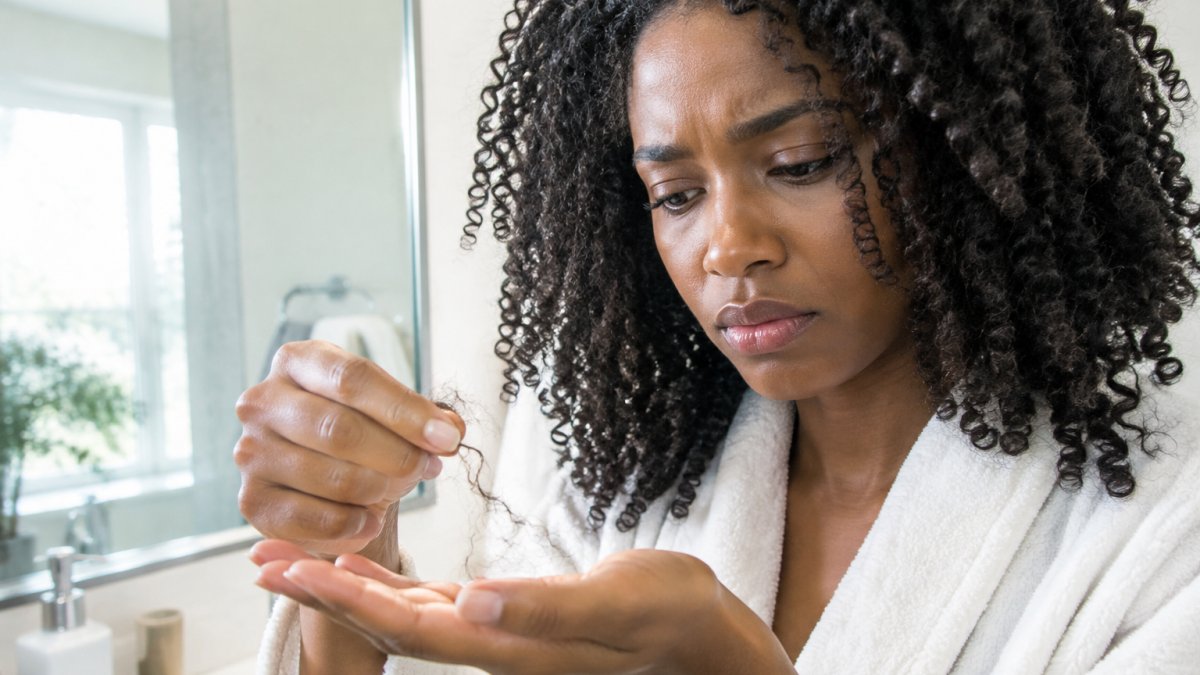
Curly hair breakage is the snapping of individual strands, and it usually shows up as short, frizzy pieces that never seem to grow past a certain length. Diagnosing the problem before buying another product is the most useful first step.
Here's the key distinction. Breakage is mechanical or structural damage to the hair fiber. Shedding is a natural part of the growth cycle.
Breakage vs. Shedding: How to Tell the Difference
Shed hairs have a small white bulb at the root end. Broken hairs do not. They snap mid-shaft and leave a rough, uneven tip.
Try this simple check:
- Collect hair from your shower drain or brush for one wash day
- Look for a white bulb on the ends (shedding) versus jagged tips (breakage)
- Note the length: short pieces point to breakage, full-length strands to shedding
- Check for split ends and mid-shaft splits under bright light
- Repeat after your next wash to confirm the pattern
If most strands lack a bulb, you are dealing with breakage. Understanding your hair's porosity can help you pick the right fix.
How to Stop Curly Hair Breakage After Washing
Most breakage happens on wash day. Wet hair stretches and its cuticle lifts, so rough handling snaps fragile strands fast. The fix is slip and patience, not speed.
Work in this order:
- Detangle before you wash, on damp hair with conditioner
- Apply a generous Moisture Lock Leave-in Conditioner for slip
- Use a wide-tooth comb or your fingers, starting at the ends
- Rinse gently and blot with a microfiber towel, never rub
Detangle With Slip, Not Force
Start at the ends and work upward in small sections. Never pull through a knot. If a tangle resists, add more conditioner and use your fingers. A common mistake is detangling dry hair with a fine-tooth comb, which causes friction and mechanical damage. Take the extra minute. Your hair fiber will thank you.

How to Stop Curly Hair Breakage Naturally: Moisture, Protein, and Balance
Natural repair comes down to one rule: balance moisture with protein. Dry hair needs hydration. Weak, mushy hair needs protein. Too much of either causes problems. The reason is structural. Moisture and conditioning agents soften the cuticle and add elasticity, while protein ingredients bond to the cortex and add tensile strength. Curls need both, but the ratio that works depends on your hair's current state, not on a fixed schedule.
Signs you need more moisture:
- Hair feels rough and straw-like
- Ends look frayed and brittle
- Curls lack bounce
- Strands snap when dry but stretch normally when wet
Signs you need more protein:
- Hair feels soft and stretchy when wet
- Strands snap easily with little tension
- Curl definition is fading
- Hair feels limp after washing and won't hold shape
Run a Simple Wet-Stretch Test
Before you buy another treatment, test a single shed strand. Wet it and stretch it gently between your fingers. If it stretches a long way and doesn't spring back, your hair is moisture-heavy and likely needs protein. If it snaps almost immediately with little stretch, it is protein-heavy or brittle and needs moisture. If it stretches a little and returns to shape, your balance is close to right. Repeat the test on a few strands from different parts of your head, since the canopy and underlayer often differ.
Sequence Treatments Instead of Stacking Them
Protein treatments can be overused, leaving hair stiff and brittle, so alternating moisture and strengthening treatments based on how hair responds is a sensible approach. Apply protein treatments to clean, damp hair, follow the package timing, and rinse thoroughly. The Retention Therapy Protein Treatment pairs hydrolyzed wheat protein with African wild honey, a natural humectant that draws in moisture.

Watch out: if hair feels stiff, straw-like, or snaps right after a protein treatment, you have likely overdone it. Pause strengthening products for a few wash cycles and lean on moisture and gentle handling until elasticity returns. Understanding your hair's porosity also matters here, because low-porosity hair can sit under heavy protein and moisture layers while high-porosity hair loses both quickly.
Use the wet-stretch test to read what your curls need, then treat accordingly.
| Wet-stretch result | What it means | What to do |
|---|---|---|
| Stretches a long way and doesn't spring back | Moisture-heavy | Add protein |
| Snaps almost immediately with little stretch | Protein-heavy or brittle | Add moisture |
| Stretches a little and returns to shape | Balance is close to right | Keep current routine |
| Feels rough and straw-like, ends frayed | Needs more moisture | Hydrate |
| Feels soft and stretchy when wet | Needs more protein | Strengthen |
| Stiff or straw-like right after protein treatment | Overdid protein | Pause strengthening for a few wash cycles |
Curly Hair Split Ends: Trim, Seal, and Prevent
Split ends cannot be repaired. They can only be cut off or sealed. Once the cuticle splits, the damage travels up the shaft, so frequent trims are non-negotiable.
Ask your stylist for regular trims. Between appointments, seal your ends with a lightweight Nourishing Seal Hair Oil to lock in hydration and protect against dryness. Apply it to damp ends after your leave-in. This simple step slows new splits and keeps curls looking defined.
Protect Fragile Strands Between Wash Days
Fine and type 4 hair can be especially fragile, and everyday handling can cause damage. Nighttime friction is the biggest culprit, but protective styles carry their own risks. A style is only protective if it reduces manipulation without adding tension.
Try these habits:
- Sleep on a satin pillowcase or in a satin bonnet to reduce friction
- Loosely pineapple curls on top of your head at night
- Avoid tight ponytails, braids, or buns that pull at the hairline (the American Academy of Dermatology)
- Refresh with water and leave-in instead of dry brushing
Wear Protective Styles Safely
Protective styles are not automatically damage-free. The main risks come from tension at the root, duration, and takedown.
- Tension: A style should never sting, throb, or leave bumps along the hairline. If you feel pulling when you turn your head, it is too tight. Ask for a looser braid or twist, and never let edges be pulled tight to look neat.
- Duration: Leaving braids or twists in for many weeks can let shed hair accumulate and mat at the root, making takedown more damaging.
- Takedown: Never rip through a style dry. Apply conditioner or oil to the length, work in small sections, and use your fingers or a wide-tooth comb to release each braid or twist slowly. Cut out any matted sections rather than tearing through them.
Watch out: scalp discomfort is not a normal part of protective styling. If itching, tenderness, or small bumps along the hairline persist, take the style down and see a stylist or healthcare professional.
Our guide to type 4 hair care explains how coily patterns need extra gentle handling, and the same tension rules apply to any curl pattern when hair is fine or already fragile.
Build Your Breakage-Reduction Routine With Fancy's Hair Innovation
A routine only works if it is simple enough to keep. That is why we built our system around curl health instead of styling tricks. Our science-backed formulas strengthen, hydrate, and define textured hair.
The Strength & Restore Trio gives you a cleanse, hydrate, and rebuild routine in three steps. It is designed for hair recovering from heat, color, or protective styles. It is also suitable for salon professionals.

Frequently Asked Questions
How do I stop my curly hair from breaking after washing?
Most post-wash breakage comes from handling wet hair too roughly. Apply a slippery leave-in conditioner before detangling, work in small sections with a wide-tooth comb or your fingers, and never brush dry curls. Pat, don't rub, with a microfiber towel or cotton T-shirt. A leave-in like Fancy's Moisture Lock adds slip from Slippery Elm and Marshmallow Root, which reduces the friction that snaps fragile strands.
What does curly hair breakage look like?
Breakage shows up as short, frizzy pieces sticking up around your crown or mid-lengths, tapered ends, and lots of small broken hairs in your comb or on your pillow. It differs from shedding, which produces longer strands with a white bulb at the root. If you see mostly short fragments without bulbs, that's curly hair breakage and it points to mechanical damage or dryness rather than normal hair loss.
Can broken curly hair grow back?
Yes. Breakage doesn't damage the follicle, so the hair keeps growing; the problem is retention, not growth. Once you reduce friction, add moisture, and balance protein, new length holds. Track progress with photos over time rather than daily checks so you can see real change.
How can I reduce curly hair breakage naturally?
Focus on moisture, gentle handling, and protein-moisture balance. Deep condition weekly, seal with a lightweight oil like Fancy's Nourishing Seal Hair Oil, sleep on satin or silk, and avoid tight styles that pull on your edges. Use a protein treatment such as Retention Therapy when hair needs strengthening, and trim split ends regularly to stop them traveling up the strand.
Stopping breakage takes patience, but the payoff is real: longer, stronger curls that finally hold their length. If you are tired of guessing which product will help, let us simplify it for you. Get started with Fancy's Hair Innovation and give your curls a routine built to protect every strand.
