


Quick Summary
The best natural hair repair system for curls balances moisture and protein, matched to your hair's porosity and texture. Curly hair breaks because its bends create friction and block oil from reaching the ends, so gentle handling and low heat matter as much as the products you choose.
- Detangle only when hair is wet and coated in conditioner, working from the ends upward.
- Dry hair by gently squeezing with a cotton T-shirt or microfiber towel, not rubbing.
- Alternate hydrating treatments with periodic protein treatments based on how wet hair feels.
- The Strength & Restore Trio costs $108.00 and combines shampoo, conditioner, and treatment.
- Trim split ends regularly, since a split end can travel up the strand and cause more breakage.
Table of Contents
- What Causes Curly Hair Breakage and Dryness
- How to Stop Curly Hair Breakage at the Source
- Key Ingredients to Look for in a Natural Hair Repair System
- How to Choose a Repair System for Your Hair Porosity and Texture
- Best Hair Masks for Damaged Curls and How to Use Them
- Protein Treatment for Natural Hair: How Often and Why It Matters
- Natural Hair Strengthening Routine: Comparing Fancy's Products by Cost and Use
- Scalp Health, Post-Treatment Maintenance and Ingredient Transparency
- Booking Your First Repair Routine With Fancy's Hair Innovation
- Frequently Asked Questions
Last Updated: November 19, 2026
Curly hair breaks for a handful of predictable reasons, and most of them are fixable without buying a cabinet full of products. If you have been switching bottles every few weeks and still see snapping at the ends, the problem is usually the routine, not the brand. This guide walks through what causes curly hair breakage and dryness, what to look for in a natural hair repair system for curls in 2026, and how the 6-step regimen from Fancy's Hair Innovation is built.
What Causes Curly Hair Breakage and Dryness
Curly hair tends to break because its shape makes it harder for natural oils to travel from the scalp to the ends. Each bend in a curl is a spot where the strand can rub against itself, against clothing, and against your fingers during detangling. Over time, that friction roughens the outer cuticle and the strand snaps where it is weakest.
Heat styling, chemical processing, and tight protective styles add to the damage (the American Academy of Dermatology). Many people also dry their hair by rubbing it with a cotton towel, which lifts the cuticle and leaves it open to moisture loss. Dryness and breakage feed each other: dry strands are brittle, and brittle strands break more when you manipulate them.
Product buildup is a quieter cause. Heavy creams and oils that are never fully washed out can coat the hair and block hydration, so the hair looks fine but feels stiff and dull.
How to Stop Curly Hair Breakage at the Source
Stopping breakage starts with handling your hair less roughly. Detangle only when hair is wet and coated in conditioner, working from the ends upward with a wide-tooth comb or your fingers. Dry with a cotton T-shirt or microfiber towel by gently squeezing, not rubbing. Sleep on a satin or silk pillowcase or wrap your hair at night to reduce friction.
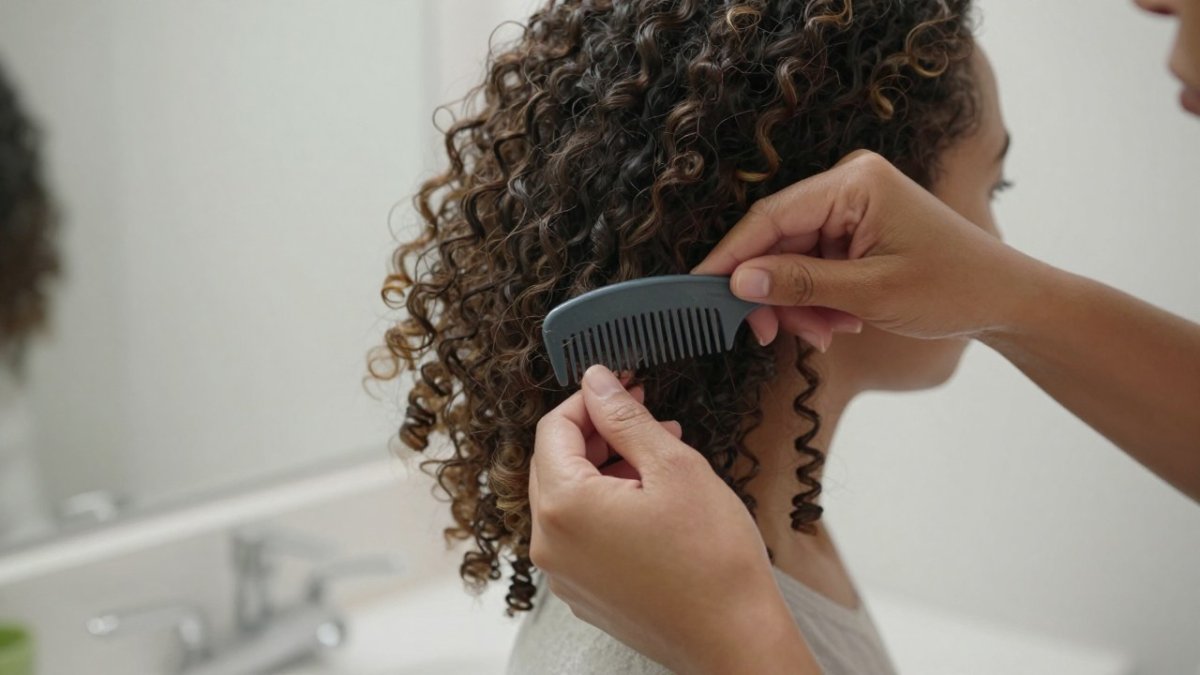
Next, look at heat. Air-dry when you can, and if you use a diffuser or dryer, keep the temperature moderate. Trim split ends regularly, since a split end can travel up the strand and cause more breakage.
Finally, balance moisture and protein. Strands that get too much protein can turn stiff and snap, while strands that get too little protein become weak and stretchy. Most curly hair benefits from a routine that alternates hydrating treatments with periodic protein treatments, and you can judge which one your hair needs by how it feels when wet. Hair that feels mushy and stretches too far usually needs protein. Hair that feels stiff and rough usually needs moisture.
Watch out: Scalp massage with a heavy oil can help distribute natural sebum, but overloading the ends with thick oil can weigh curls down and attract buildup.
Key Ingredients to Look for in a Natural Hair Repair System
When you read a product label, a few ingredient categories tell you most of what you need. Protein sources such as hydrolyzed wheat protein and quinoa protein are found in some Fancy's formulas. Humectants such as glycerin and honey are also used in some formulas. Emollient oils such as jojoba, avocado, apricot, and baobab are used in some formulas. Conditioning agents such as cetearyl alcohol and behentrimonium chloride are used in some formulas.
Look for ingredients that appear in the full ingredient list, not just in the marketing copy. Ingredients are listed from highest to lowest concentration, so a botanical extract near the bottom of the list is present in a small amount.
Not every ingredient in a repair system needs to be "natural" to work well. What matters most is whether the formula is balanced and whether it suits your hair's condition.
How to Choose a Repair System for Your Hair Porosity and Texture
Porosity describes how easily your hair takes in and holds moisture. Low-porosity hair has tightly closed cuticles, so products can sit on top and cause buildup. Lightweight leave-ins and water-based products tend to work better here. High-porosity hair has gaps in the cuticle, so it absorbs moisture quickly but loses it fast. Richer creams, butters, and sealing oils help hold hydration in.
Texture matters too. Type 3 and Type 4 curls are more prone to dryness and breakage because of their tight bends, so they usually benefit from a full routine with both hydration and protein. Finer curls can be weighed down by heavy products, so a lighter system with a clear shampoo and a light leave-in may suit you better.
A simple test: after washing, watch how your hair dries. If it stays frizzy and dry despite conditioning, you may need more moisture. If it feels limp or coated, reduce the richness of your products.
Best Hair Masks for Damaged Curls and How to Use Them
A deep conditioning mask is useful once or twice a week for damaged curls. Apply it to damp hair after shampooing, focusing on the mid-lengths and ends. Cover your hair with a shower cap and leave it on for the time listed on the product, usually 10 to 30 minutes. Rinse with lukewarm water to help seal the cuticle.
If your hair is damaged and brittle, a protein-rich mask can help. If it is dry and stretchy, a moisture-rich mask fits better. Alternating the two keeps the balance steady.
Protein Treatment for Natural Hair: How Often and Why It Matters
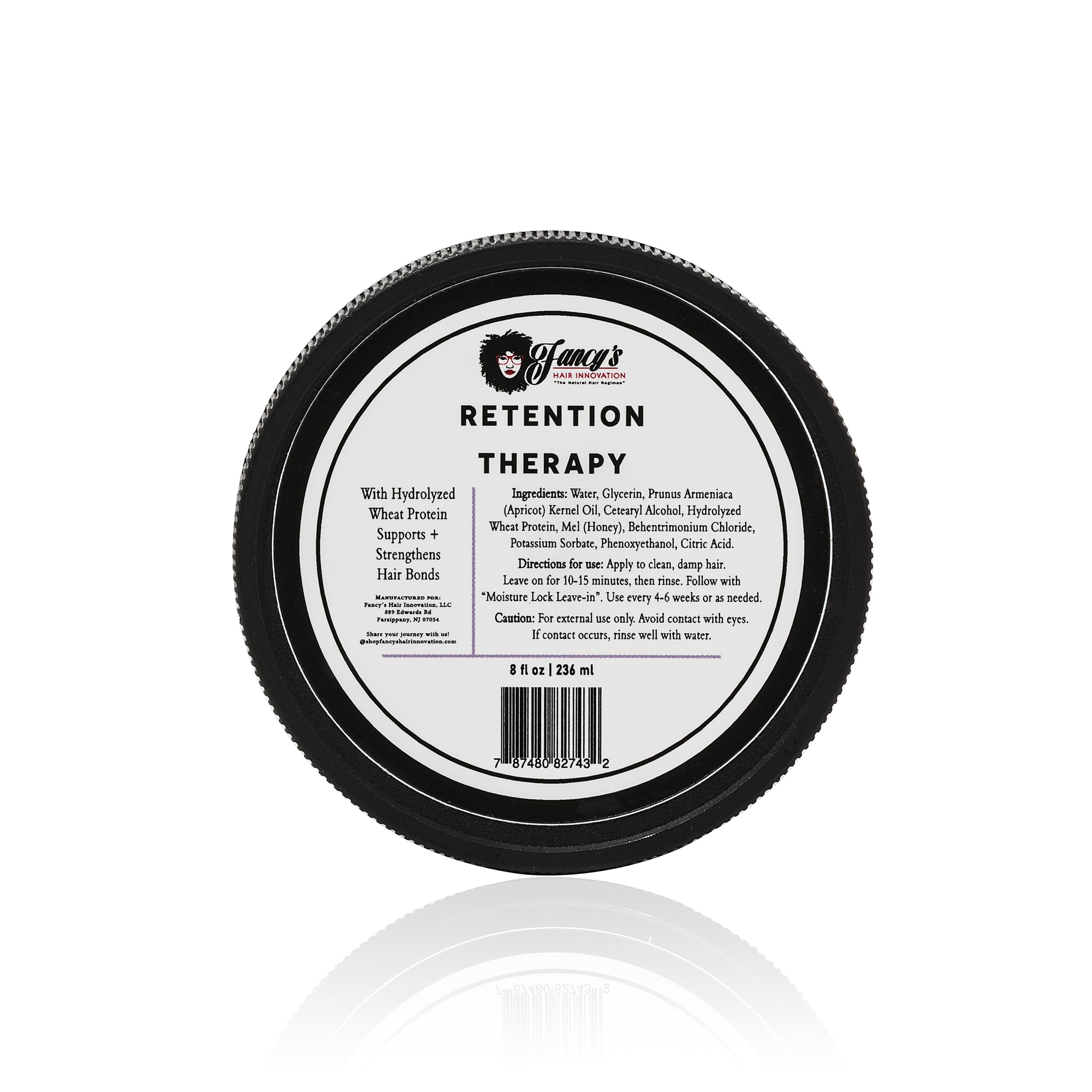
The Retention Therapy Protein Treatment from Fancy's Hair Innovation ($38.00) is built around hydrolyzed wheat protein and African wild honey, and it is positioned for damaged, brittle, or color-treated hair.
For most people, a protein treatment every two to four weeks is a reasonable starting point, depending on how damaged the hair is and how often it is heat-styled. Watch your hair after each use. If it feels stiff, reduce frequency. If it feels stretchy or limp, increase hydration between treatments.
Natural Hair Strengthening Routine: Comparing Fancy's Products by Cost and Use
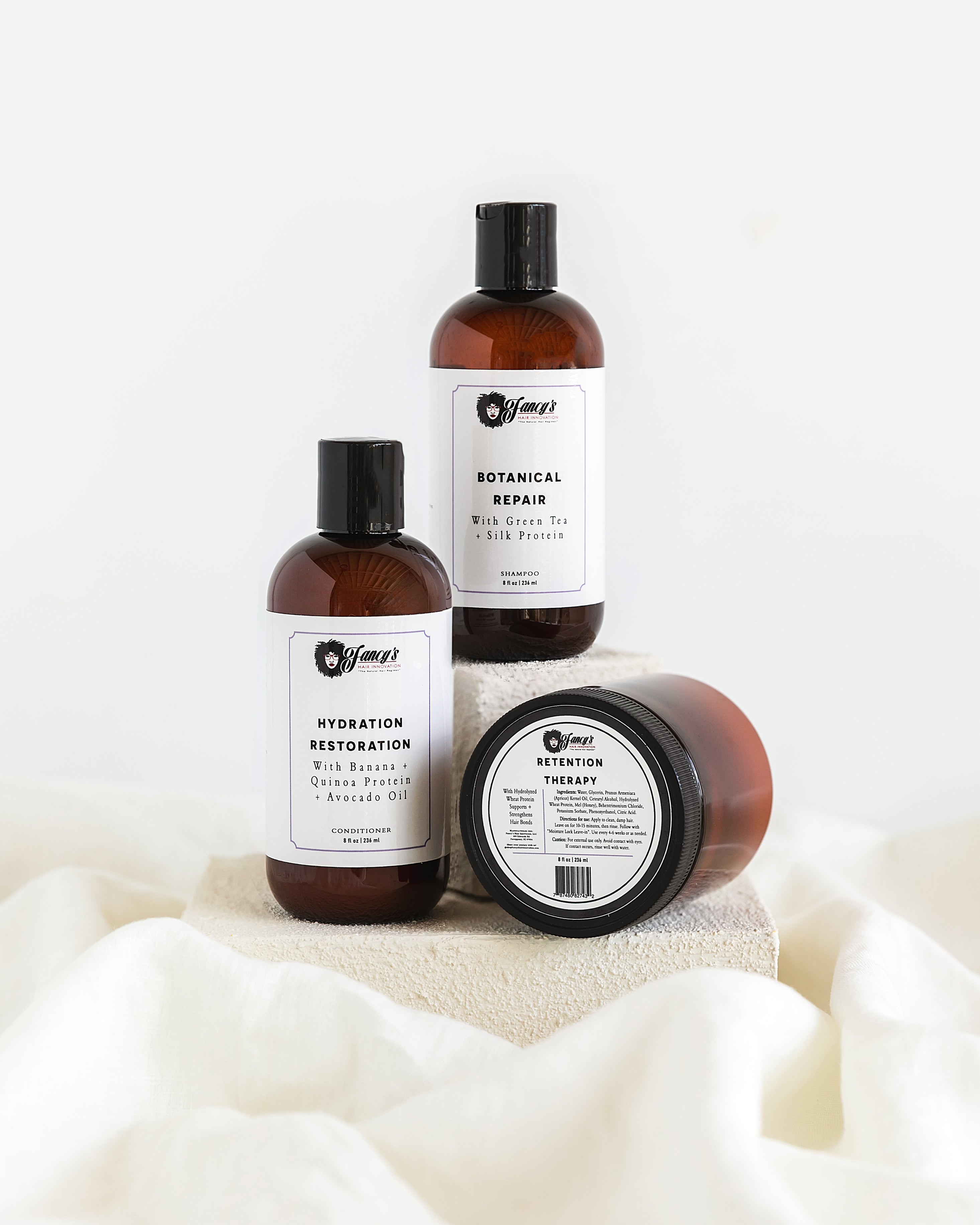
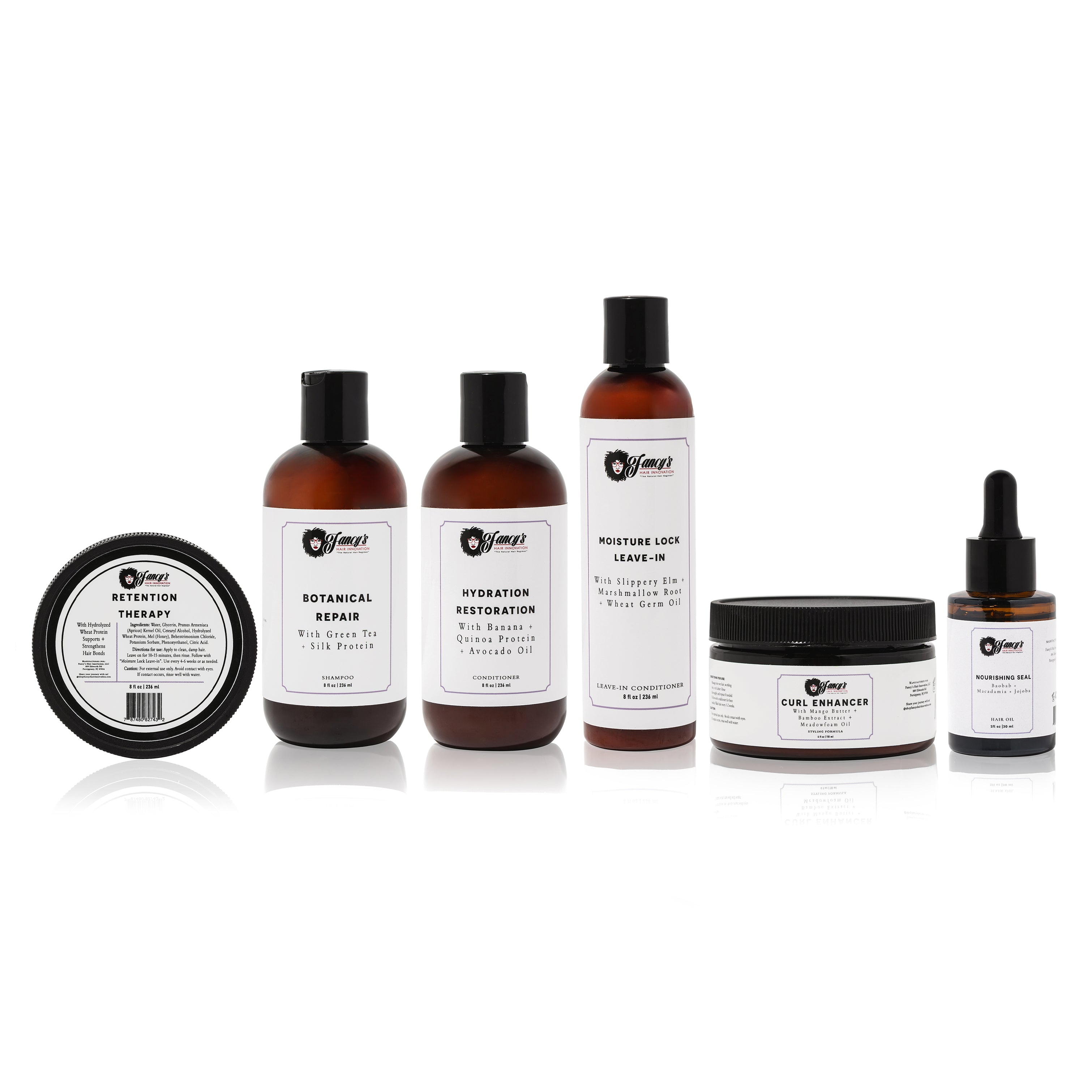
Fancy's Hair Innovation sells its products individually and as bundles. The Strength & Restore Trio ($108.00) combines the Botanical Repair Shampoo, Hydration Restoration Conditioner, and Retention Therapy Treatment into a three-step system. The Natural Hair Regimen ($149.95) is a six-step routine.
Individually, the Botanical Repair Shampoo costs $35.00, the Hydration Restoration Conditioner $35.00, the Moisture Lock Leave-in Conditioner $25.00, and the Nourishing Seal Hair Oil $18.00. The Retention Therapy Protein Treatment is $38.00 on its own.
Comparison Table and Cost per Wash
| Option | Price (USD) | Steps Included | Best For |
|---|---|---|---|
| Strength & Restore Trio | $108.00 | Shampoo, conditioner, treatment | Breakage recovery, heat or color damage |
| The Natural Hair Regimen | $149.95 | Six steps, including leave-in, curl enhancer, and oil | Full routine, wash-and-go and defined curls |
| Retention Therapy Protein Treatment | $38.00 | Protein treatment only | Adding protein to an existing routine |
| Moisture Lock Leave-in Conditioner | $25.00 | Leave-in only | Daily moisture and curl refresh |
| Nourishing Seal Hair Oil | $18.00 | Sealing oil only | Sealing moisture on dry ends |
Price (USD)
How to Calculate Your Own Cost per Wash
Fancy's does not publish a number of washes per bottle, so any cost-per-wash figure has to be built from your own usage. The method is simple: divide the price of the product or bundle by the number of washes you expect to get from it. A person who washes once a week and uses the full six-step regimen will get fewer washes per bottle than someone who washes every two weeks, because each wash uses a set amount of each product.
To make the comparison honest, track two things for a month: how many washes you actually do, and how many pumps or scoops of each product you use per wash. Then divide. If a $35.00 shampoo lasts 20 washes at your usage rate, that is $1.75 per wash for shampoo alone. If the same bottle lasts 12 washes because you use a heavier hand, the cost per wash rises to about $2.92. The bundle price does not change, but your cost per wash does, and that is the number that matters over a year.
The full regimen costs more per wash but replaces separate leave-in, curl enhancer, and oil purchases you might otherwise make. Comparing the two over three to six months, not one wash, shows whether the full routine fits your budget and your hair's needs.
Watch out: cost per wash is only useful if you compare like with like. A cheap shampoo that requires three applications to feel clean can cost more per wash than a concentrated one used once.
Cost comparison is only part of the picture. If your hair breaks mainly from heat or color, the Trio may cover what you need. If you want leave-in moisture and curl definition, the full regimen is the more complete option, and the per-wash math should include the products it replaces.
Scalp Health, Post-Treatment Maintenance and Ingredient Transparency
Scalp health affects the hair that grows from it, and the mechanism is straightforward: hair emerges from follicles on the scalp, and a scalp that is dry, flaky, inflamed, or coated with buildup can make new hair feel weak and can worsen the look of shedding even when the lengths are in decent shape. Gentle cleansing and periodic clarifying help keep the scalp balanced. The Botanical Repair Shampoo is sulfate-free and paraben-free according to its listing. If you use heavy creams and oils, a clarifying wash every few weeks helps remove the residue that regular cleansing leaves behind.
Post-Treatment Maintenance: The Week After a Repair Treatment
The maintenance phase after a treatment also matters for how your hair holds up. After a protein or deep treatment, the cuticle has been temporarily smoothed and the strand is holding moisture differently, so the next week matters.
A practical pattern is to keep the hair hydrated between treatments with a leave-in or a light oil, and to avoid stacking a second strong treatment on top of the first. The schedule below is a reasonable starting point for damaged curls; adjust it to how your hair feels.
- Day of treatment: apply the mask or protein treatment to damp hair, rinse with lukewarm water, and follow with a leave-in while the hair is still damp.
- Days 1-3: avoid heat styling and tight styles so the strand is not stressed while it is settling.
- Days 4-7: refresh with water and a small amount of leave-in rather than re-washing, and seal ends with a light oil.
- Week 2 onward: return to your normal wash cadence, and alternate moisture and protein treatments rather than repeating the same one.
Watch out: layering a protein treatment directly on top of another protein treatment within a few days can leave hair stiff and prone to snapping. Space them out and judge by how the hair feels when wet.
Ingredient Transparency: How to Read the Label
Ingredient transparency matters when you are paying a premium, and it is one of the areas most product roundups skip. Read the full ingredient list on any product you buy, check the order of ingredients, and compare it with what you need. Ingredients are listed from highest to lowest concentration, so a botanical extract near the bottom of the list is present in a small amount, no matter how prominent it is on the front label. The Fancy's Hair Innovation product pages list ingredients for each item.
A few transparency questions are worth asking of any repair system, not just this one. Does the brand publish a full ingredient list? Does it disclose fragrance components? Does it state whether the formula is vegan, cruelty-free, or free of specific classes of ingredients, and can you verify that against the label? None of these questions replaces patch-testing a product on your own hair, but they let you compare systems on more than marketing claims.
Booking Your First Repair Routine With Fancy's Hair Innovation
Start with the problem you want to solve. If breakage is your main concern and you want a simple three-step system, the Strength & Restore Trio is a reasonable place to begin. If you want a complete routine with leave-in moisture and curl definition, The Natural Hair Regimen covers more steps. For a focused boost of protein, the Retention Therapy Protein Treatment can be added to a routine you already use.
Use the product for at least four to six weeks before judging the results, and pair it with the handling habits described above. Gentle detangling, low heat, and regular trims will do as much for your hair as any single product. If breakage continues despite a consistent routine, speak with a dermatologist or a trichologist, because some hair loss and breakage come from causes a product cannot fix.
For more depth on stopping breakage, read our companion guide: How to Stop Curly Hair Breakage and Keep Curls Strong.
Ready to rebuild your routine? Explore the Strength & Restore Trio for a three-step breakage system, or see The Natural Hair Regimen for the full six-step routine. If you want to add protein to what you already use, the Retention Therapy Protein Treatment is a focused option.
American Academy of Dermatology guidance on hair care and breakage
Frequently Asked Questions
What is the best hair repair product for damaged curls?
Fancy's Retention Therapy Protein Treatment is priced at $38.00 and is formulated with hydrolyzed wheat protein and African wild honey. It is positioned for damaged, brittle, or color-treated hair. The Hydration Restoration Conditioner ($35.00) is also available.
How can I stop curly hair from breaking?
Most curly hair breakage comes from dryness, tangling during detangling and heat or tension from styling. Detangle with conditioner on wet hair, reduce heat, and keep moisture levels consistent with a leave-in. Fancy's Moisture Lock Leave-in Conditioner is priced at $25.00.
How often should you use a protein treatment on natural hair?
Many people with natural hair use a protein treatment every two to four weeks, but the right frequency depends on how your hair responds. If strands feel mushy or stretch without snapping back, you are using too much protein and should space treatments out. If hair feels brittle and breaks easily, you may need protein more often. Fancy's Retention Therapy Protein Treatment is priced at $38.00.
How long does it take to see results from a natural hair repair system?
Results vary by individual hair type and routine. Following a routine consistently, rather than switching products frequently, gives the clearest read on whether a system is working for your hair.
